Yep, we may get a tiny thank-you (read: commission) when you buy through
links on Soundfindr — not enough for a yacht, but enough to keep the lights (and
servers) on.
Learn more
56
Highlights
41
Differences
7
Reactions
0
Likes
Rode M3
vs
Rode NT5:
56 Highlights & 41 Differences —
So, Which Microphone Actually Works Better
Decide if you want a rugged, controlled setup or a lightweight, pro-certified mic for your work.
Still unsure between Rode M3 and Rode NT5? We compared their microphone type, power source, multi-pattern switching & phantom power requirement, feel, and feedback from real users so you can make a confident choice.
Rode M3 vs Rode NT5: Which Condenser Microphone Suits Your Needs Best?
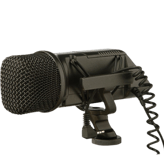
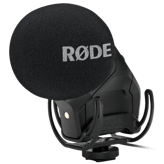
Both the Rode M3 and Rode NT5 are professional-grade condenser microphones celebrated for their superb audio capture in a variety of recording settings, including studio, broadcast, podcasting, and live performances. They share a cardioid polar pattern and XLR connectivity with phantom power support, ensuring compatibility with most professional audio interfaces and mixers.
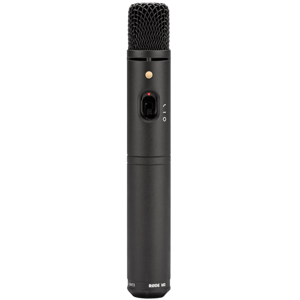
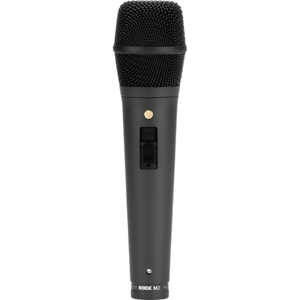
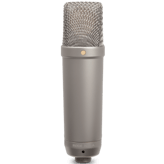
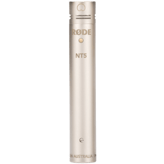
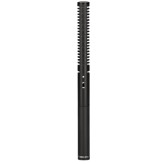
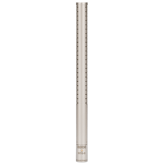
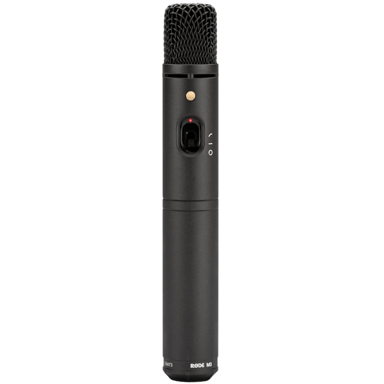
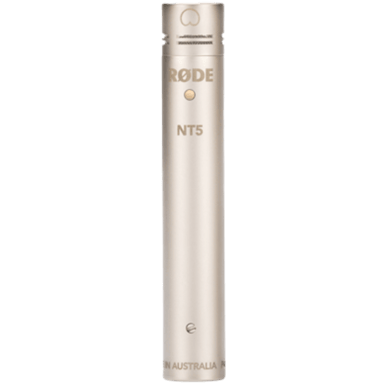
However, these microphones differ significantly in design, control features, and audio specifications. The M3 sports a handheld metal body with onboard controls and multi-power options. At the same time, the NT5 favors a compact pencil-style form with a focus on delivering pristine audio clarity and broadcast certification. Let's dive deeper into what makes each microphone excel.
The Distinctive Qualities of the Rode M3
The Rode M3's handheld design provides robustness and user control, making it a favorite for performers and broadcasters who need a microphone built to withstand dynamic situations. Its metal housing includes a built-in shock mount and a pop filter to reduce unwanted noise, along with an included adjustable arm or stand, adding to its versatility in various recording environments.
One major advantage is the M3's onboard gain control knob and LED indicator lights, allowing quick adjustments on-site without touching the sound mixer or interface. Its low-cut filter and -20 dB pre-attenuation pad help tame plosives and handle high sound pressure levels up to 142 dB SPL, making it suitable for louder sources like guitar cabinets or drums.
The M3 supports dual power modes: phantom power and a built-in 9V battery, granting more flexibility for field recording or locations withouta phantom power supply. With a weight of 0.86 lbs, it balances portability with a solid feel. Additionally, the package equips users with a stand, cables, a mounting clip, and a carrying case, offering a full kit for immediate setup and use.
Exploring the Strengths of the Rode NT5
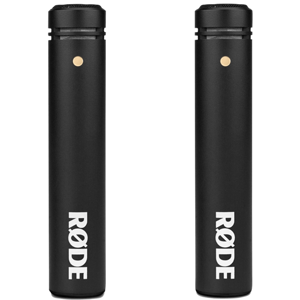
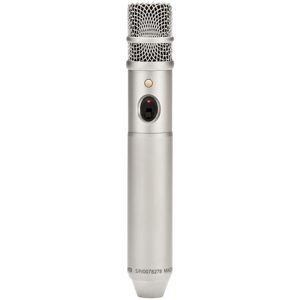
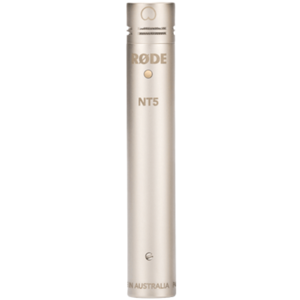
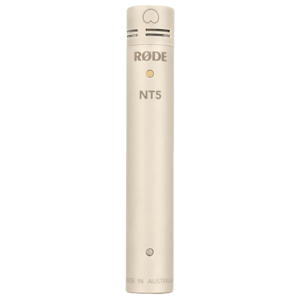
On the other hand, the Rode NT5's pencil-style design is compact and lightweight at just 0.22 lbs, ideal for discreet miking or multi-mic arrays for stereo recordings. The NT5's alloy body features an internal shock mount with additional rubberized dampening, ensuring minimal handling noise and improved transient response.
While the NT5 lacks onboard controls, it compensates by being fully detachable in terms of cables, allowing easy swaps and replacements, which is a useful feature in a studio setup. Its max SPL of 143 dB ensures it can handle loud sound sources without distortion. Furthermore, the NT5 carries professional broadcast certification along with FCC/CE approval and environmental compliances like RoHS, underpinning its quality and reliability for high-end productions.
Accessory-wise, the NT5 package includes adapters, an extra windscreen, and a carrying case, but no stand or cables are provided, assuming studio users already own these essentials.
Quick Take
The Rode M3 offers excellent versatility with onboard gain control, battery, and phantom power options, plus a robust metal handheld body well-suited for live and diverse recording scenarios. Meanwhile, the NT5 delivers pristine studio-grade audio with lower noise, wider frequency range, and fine transient response wrapped in a lightweight pencil mic, perfect for critical broadcast and studio applications. Each mic caters to distinct user needs; one focused on convenience and control, the other on refined sound quality.
Bottom Line
If your priority is impeccable sound quality and professional broadcast standards, the Rode NT5 is the superior choice, offering exceptional noise performance and broad frequency response in a sleek, lightweight design. However, if you require a more versatile microphone with hands-on control, robust build, and dual power options suitable for field and live use, the Rode M3 stands out as a practical and dependable option.
Verdict
Winner: Rode NT5 - For its superior audio fidelity, low noise, professional certification, and studio-friendly pencil-style design.
Runner-up: Rode M3 - For flexible power options, onboard gain control, and rugged handheld construction suited for live performances and varied environments.
Side by side. The numbers. The features. No drama.
Trying to decide between Rode M3 and Rode NT5? We cover specs, sound performance, quirks, crowd favorites, and which microphone gives better bang for your buck.
The pencil-style form factor of the NT5 is really appealing for discreet placement and stereo setups. The M3's handheld design is okay, but I prefer something less intrusive for my studio work.
See more
Year of Release
What year was it released?
56
Rode M3
0Votes
2007
28
Rode NT5
0Votes
2002
Rode NT5
Released in 2002, the NT5 has remained a favorite among engineers for over two decades thanks to its reliable studio and live performance quality.
Indicates when the microphone was launched.
In the battle of Year of Release,
Rode M3 ◉ is
better than
Rode NT5 ◉
, delivering
higher
28 score
measurement.
Don’t keep it to yourself — be the first to react and review the
Year of Release on Rode M3 ◉
vs Rode NT5 ◉ and help others decide!
Weight comparison: Rode M3 weighs 0.86 lbs (390 g), considerably heavier than the NT5 at 0.22 lbs (100 g); the NT5 is more portable for field recording.
The microphone’s physical weight.
In the battle of Weight,
Rode M3 ◉ is
worse than
Rode NT5 ◉
, delivering
higher
0.6 lbs
measurement.
Based on community votes for Weight,
Rode M3 ◉ earned
0 votes,
less than
Rode NT5 ◉,
which got 1 votes.
Portability is key for my setup, and the weight difference here is massive. The NT5 being just 0.22 lbs makes it incredibly light and easy to handle for long sessions or travel, compared to the M3 at 0.86 lbs.
Who knows?
0Votes
Rode M3
(Help us out by suggesting one!)
Who knows?
0Votes
Rode NT5
(Help us out by suggesting one!)
Maximum length of included stand or boom arm.
Don’t keep it to yourself — be the first to react and review the
Stand/Arm Length on Rode M3 ◉
vs Rode NT5 ◉ and help others decide!
Capsule Diameter
What is the capsule diameter?
0.5
inch
0Votes
0.5
inch
0Votes
vs
Capsule Diameter
Capsule Diameter comparison: Both Rode M3 and NT5 feature a capsule diameter of 0.5 inch, suggesting similar diaphragm sizes for sound capture.
The diameter of the microphone capsule.
In the battle of Capsule Diameter,
Rode M3 ◉ is
same as
Rode NT5 ◉
, delivering
equal
0.50 inch
measurement.
Don’t keep it to yourself — be the first to react and review the
Capsule Diameter on Rode M3 ◉
vs Rode NT5 ◉ and help others decide!
Width
What is the width?
1.3
inch
0Votes
0.79
inch
0Votes
vs
Width
Width comparison: Rode M3 is 1.3 inch wide, while Rode NT5 is narrower at 0.79 inch; the M3 offers a bulkier form factor suitable for handheld use.
The microphone’s overall width.
In the battle of Width,
Rode M3 ◉ is
worse than
Rode NT5 ◉
, delivering
higher
0.5 inch
measurement.
Don’t keep it to yourself — be the first to react and review the
Width on Rode M3 ◉
vs Rode NT5 ◉ and help others decide!
Depth
What is the depth?
1.3
inch
0Votes
4.5
inch
0Votes
vs
Depth
Depth comparison: Rode M3 has a depth of 1.3 inch, versus Rode NT5's 4.5 inch depth; NT5 is longer with a pencil-style design, ideal for focused recording.
The microphone’s overall depth.
In the battle of Depth,
Rode M3 ◉ is
better than
Rode NT5 ◉
, delivering
lower
3.2 inch
measurement.
Don’t keep it to yourself — be the first to react and review the
Depth on Rode M3 ◉
vs Rode NT5 ◉ and help others decide!
Mounting Thread Size
What is the mounting thread size?
77
Rode M3
0Votes
5/8"
92
Rode NT5
0Votes
5/8"
Rode NT5
The Rode NT5 microphone features a 5/8"-27 female mounting thread. However, it comes with an included adapter that allows compatibility with 3/8"-16 threaded stands, making it versatile for various mounting options.
The thread size for mounting compatibility.
In the battle of Mounting Thread Size,
Rode M3 ◉ is
worse than
Rode NT5 ◉
, delivering
lower
15 score
measurement.
Don’t keep it to yourself — be the first to react and review the
Mounting Thread Size on Rode M3 ◉
vs Rode NT5 ◉ and help others decide!
Height
What is the height?
8.86
inch
0Votes
4.5
inch
0Votes
vs
Height
Height comparison: Rode M3 stands taller at 8.86 inch compared to the NT5's 4.5 inch, reflecting their different usage contexts and form factors.
The microphone’s overall height.
In the battle of Height,
Rode M3 ◉ is
worse than
Rode NT5 ◉
, delivering
higher
4.4 inch
measurement.
Don’t keep it to yourself — be the first to react and review the
Height on Rode M3 ◉
vs Rode NT5 ◉ and help others decide!
Package Width
What is the package width?
5.2
inch
0Votes
4.5
inch
0Votes
The shipping package’s width.
In the battle of Package Width,
Rode M3 ◉ is
worse than
Rode NT5 ◉
, delivering
higher
0.7 inch
measurement.
Don’t keep it to yourself — be the first to react and review the
Package Width on Rode M3 ◉
vs Rode NT5 ◉ and help others decide!
Package Depth
What is the package depth?
3.05
inch
0Votes
0.79
inch
0Votes
The shipping package’s depth.
In the battle of Package Depth,
Rode M3 ◉ is
worse than
Rode NT5 ◉
, delivering
higher
2.3 inch
measurement.
Don’t keep it to yourself — be the first to react and review the
Package Depth on Rode M3 ◉
vs Rode NT5 ◉ and help others decide!
Package Height
What is the package height?
10.9
inch
0Votes
0.79
inch
0Votes
The shipping package’s height.
In the battle of Package Height,
Rode M3 ◉ is
worse than
Rode NT5 ◉
, delivering
higher
10.1 inch
measurement.
Don’t keep it to yourself — be the first to react and review the
Package Height on Rode M3 ◉
vs Rode NT5 ◉ and help others decide!
Cable Length
What is the cable length?
Who knows?
0Votes
Rode M3
(Help us out by suggesting one!)
Who knows?
0Votes
Rode NT5
(Help us out by suggesting one!)
Length of the included or integrated cable.
Don’t keep it to yourself — be the first to react and review the
Cable Length on Rode M3 ◉
vs Rode NT5 ◉ and help others decide!
Capsule Length
What is the capsule length?
Who knows?
0Votes
Rode M3
(Help us out by suggesting one!)
Who knows?
0Votes
Rode NT5
(Help us out by suggesting one!)
The length of the microphone capsule.
Don’t keep it to yourself — be the first to react and review the
Capsule Length on Rode M3 ◉
vs Rode NT5 ◉ and help others decide!
Grill Diameter
What is the grill diameter?
Who knows?
0Votes
Rode M3
(Help us out by suggesting one!)
Who knows?
0Votes
Rode NT5
(Help us out by suggesting one!)
The diameter of the protective microphone grill.
Don’t keep it to yourself — be the first to react and review the
Grill Diameter on Rode M3 ◉
vs Rode NT5 ◉ and help others decide!
Base Footprint Diameter
What is the base/stand footprint diameter?
Who knows?
0Votes
Rode M3
(Help us out by suggesting one!)
Who knows?
0Votes
Rode NT5
(Help us out by suggesting one!)
Diameter of the microphone base or stand footprint.
Don’t keep it to yourself — be the first to react and review the
Base Footprint Diameter on Rode M3 ◉
vs Rode NT5 ◉ and help others decide!
Condenser design captures fine detail and transient accuracy, ideal for acoustic and ambient sound recording.
Defines the operating principle of the microphone.
In the battle of Microphone Type,
Rode M3 ◉ is
better than
Rode NT5 ◉
, delivering
higher
15 score
measurement.
Don’t keep it to yourself — be the first to react and review the
Microphone Type on Rode M3 ◉
vs Rode NT5 ◉ and help others decide!
Frequency Response (Min)
What is the minimum frequency response?
40
Hz
0Votes
20
Hz
1Votes
vs
Frequency Response (Min)
Frequency Response (Min) comparison: Rode M3 captures frequencies from 40 Hz, while Rode NT5 extends lower to 20 Hz, beneficial for deeper bass response in NT5.
The lowest frequency the mic can capture.
In the battle of Frequency Response (Min),
Rode M3 ◉ is
worse than
Rode NT5 ◉
, delivering
higher
20.0 Hz
measurement.
Based on community votes for Frequency Response (Min),
Rode M3 ◉ earned
0 votes,
less than
Rode NT5 ◉,
which got 1 votes.
I need that full low-end capture for my recordings, so the frequency response is crucial. The NT5 starting at 20 Hz is way better than the M3's 40 Hz, giving it a richer sound profile.
See more
Equivalent Noise Level
What is the equivalent noise level?
21
dB
0Votes
16
dB
1Votes
vs
Equivalent Noise Level
Equivalent Noise Level comparison: NT5 features a lower equivalent noise level at 16 dB compared to M3's 21 dB, aiding cleaner recordings with less self-noise.
The self-noise generated by the microphone.
In the battle of Equivalent Noise Level,
Rode M3 ◉ is
worse than
Rode NT5 ◉
, delivering
higher
5.0 dB
measurement.
Based on community votes for Equivalent Noise Level,
Rode M3 ◉ earned
0 votes,
less than
Rode NT5 ◉,
which got 1 votes.
For critical recordings, the equivalent noise level is a huge factor. The NT5's 16 dBA is significantly better than the M3's 21, leading to much cleaner tracks, which is a big win for studio clarity.
See more
Frequency Response (Max)
What is the maximum frequency response?
20,000
Hz
0Votes
20,000
Hz
0Votes
vs
Frequency Response (Max)
Frequency Response (Max) comparison: Both microphones have a high frequency response up to 20,000 Hz, covering a standard audio range for studio mics.
The highest frequency the mic can capture.
In the battle of Frequency Response (Max),
Rode M3 ◉ is
same as
Rode NT5 ◉
, delivering
equal
20,000.00 Hz
measurement.
Don’t keep it to yourself — be the first to react and review the
Frequency Response (Max) on Rode M3 ◉
vs Rode NT5 ◉ and help others decide!
Sensitivity
What is the sensitivity?
-40
dBV/Pa
0Votes
-38
dBV/Pa
0Votes
vs
Sensitivity
Sensitivity comparison: Rode M3 has a sensitivity of -40 dBV/Pa, slightly less sensitive than NT5's -38 dBV/Pa, making NT5 a touch more sensitive to sound.
Output level relative to sound pressure.
In the battle of Sensitivity,
Rode M3 ◉ is
worse than
Rode NT5 ◉
, delivering
lower
2.0 dBV/Pa
measurement.
Don’t keep it to yourself — be the first to react and review the
Sensitivity on Rode M3 ◉
vs Rode NT5 ◉ and help others decide!
Output Impedance
What is the output impedance?
200
ohm
0Votes
100
ohm
0Votes
vs
Output Impedance
Output Impedance comparison: M3 has an output impedance of 200 ohms, double the NT5's 100 ohms, impacting signal matching and long cable runs.
Electrical resistance of the microphone’s output.
In the battle of Output Impedance,
Rode M3 ◉ is
worse than
Rode NT5 ◉
, delivering
higher
100.0 ohm
measurement.
Don’t keep it to yourself — be the first to react and review the
Output Impedance on Rode M3 ◉
vs Rode NT5 ◉ and help others decide!
Capsule Type
What is the capsule type?
66
Rode M3
0Votes
Small Diaphragm
67
Rode NT5
0Votes
Small Diaphragm
Rode NT5
Small-diaphragm capsules are known for their precise, natural sound—excellent for stereo pairs or live instruments.
Specifies the capsule style that influences sound capture.
In the battle of Capsule Type,
Rode M3 ◉ is
worse than
Rode NT5 ◉
, delivering
lower
1 score
measurement.
Don’t keep it to yourself — be the first to react and review the
Capsule Type on Rode M3 ◉
vs Rode NT5 ◉ and help others decide!
Dynamic Range
What is the dynamic range?
121
dB
0Votes
Who knows?
0Votes
Rode NT5
(Help us out by suggesting one!)
Rode M3
A dynamic range of 121 dB allows the mic to handle quiet whispers and loud peaks. This versatility is ideal for diverse recording scenarios.
The range between quietest and loudest sounds captured.
Don’t keep it to yourself — be the first to react and review the
Dynamic Range on Rode M3 ◉
vs Rode NT5 ◉ and help others decide!
Max SPL
What is the maximum SPL?
142
dB
0Votes
143
dB
0Votes
vs
Max SPL
Max SPL comparison: Rode NT5 can handle 143 dB max SPL, slightly higher than M3's 142 dB, allowing NT5 to record louder sound sources without distortion.
The maximum loudness before distortion.
In the battle of Max SPL,
Rode M3 ◉ is
worse than
Rode NT5 ◉
, delivering
lower
1.0 dB
measurement.
Don’t keep it to yourself — be the first to react and review the
Max SPL on Rode M3 ◉
vs Rode NT5 ◉ and help others decide!
Low-Cut Filter
What is the low-cut filter cutoff?
80
Hz
0Votes
Who knows?
0Votes
Rode NT5
(Help us out by suggesting one!)
vs
Low-Cut Filter
Low-Cut Filter comparison: M3 offers a low-cut filter at 80 Hz to reduce low-frequency rumble; NT5 does not provide this filter, allowing full frequency pickup.
Removes low-end rumble.
Don’t keep it to yourself — be the first to react and review the
Low-Cut Filter on Rode M3 ◉
vs Rode NT5 ◉ and help others decide!
Acoustic Principle
What is the acoustic principle?
67
Rode M3
0Votes
Pressure Gradient
72
Rode NT5
0Votes
Pressure Gradient
vs
Acoustic Principle
Acoustic Principle comparison: Both microphones operate on the pressure gradient principle, typical for condenser mics capturing directional sound.
The underlying sound capture mechanism.
In the battle of Acoustic Principle,
Rode M3 ◉ is
worse than
Rode NT5 ◉
, delivering
lower
5 score
measurement.
Don’t keep it to yourself — be the first to react and review the
Acoustic Principle on Rode M3 ◉
vs Rode NT5 ◉ and help others decide!
Minimum Terminating Impedance
What is the minimum terminating impedance?
Who knows?
0Votes
Rode M3
(Help us out by suggesting one!)
Who knows?
0Votes
Rode NT5
(Help us out by suggesting one!)
The minimum load impedance required for optimal microphone performance and to avoid signal distortion.
Don’t keep it to yourself — be the first to react and review the
Minimum Terminating Impedance on Rode M3 ◉
vs Rode NT5 ◉ and help others decide!
Directionality
What is the directionality?
57
Rode M3
0Votes
Unidirectional
12
Rode NT5
0Votes
Unidirectional
vs
Directionality
Directionality comparison: Both Rode M3 and NT5 use unidirectional patterns, optimizing recording from the front while reducing side noises.
General pickup orientation.
In the battle of Directionality,
Rode M3 ◉ is
better than
Rode NT5 ◉
, delivering
higher
45 score
measurement.
Don’t keep it to yourself — be the first to react and review the
Directionality on Rode M3 ◉
vs Rode NT5 ◉ and help others decide!
THD
What is the THD (total Harmonic Distortion)?
Who knows?
0Votes
Rode M3
(Help us out by suggesting one!)
Who knows?
0Votes
Rode NT5
(Help us out by suggesting one!)
Distortion added at high volumes.
Don’t keep it to yourself — be the first to react and review the
THD on Rode M3 ◉
vs Rode NT5 ◉ and help others decide!
Gain Range
What is the gain range?
Who knows?
0Votes
Rode M3
(Help us out by suggesting one!)
Who knows?
0Votes
Rode NT5
(Help us out by suggesting one!)
The adjustable gain span.
Don’t keep it to yourself — be the first to react and review the
Gain Range on Rode M3 ◉
vs Rode NT5 ◉ and help others decide!
Pre-Attenuation Pad
What is the pre-attenuation pad?
-20
dB
0Votes
Who knows?
0Votes
Rode NT5
(Help us out by suggesting one!)
vs
Pre-Attenuation Pad
Pre-Attenuation Pad comparison: M3 includes a -20 dB pad for handling loud sounds, while NT5 lacks this feature which suits quieter sources.
Built-in reduction for handling loud signals.
Don’t keep it to yourself — be the first to react and review the
Pre-Attenuation Pad on Rode M3 ◉
vs Rode NT5 ◉ and help others decide!
Stereo/Mono Mode
What mode is supported?
17
Rode M3
0Votes
Mono
22
Rode NT5
0Votes
Mono
vs
Stereo/Mono Mode
Stereo/Mono Mode comparison: Both models operate in mono mode, targeting single-source audio capture.
Determines recording mode.
In the battle of Stereo/Mono Mode,
Rode M3 ◉ is
worse than
Rode NT5 ◉
, delivering
lower
5 score
measurement.
Don’t keep it to yourself — be the first to react and review the
Stereo/Mono Mode on Rode M3 ◉
vs Rode NT5 ◉ and help others decide!
Voice Isolation Feature
Does it have voice isolation?
No
0Votes
Rode M3
No
0Votes
Rode NT5
vs
Voice Isolation Feature
Voice Isolation Feature comparison: Neither Rode M3 nor NT5 offers voice isolation features, suitable for controlled recording environments.
Whether the mic includes isolation tech.
In the battle of Voice Isolation Feature,
Rode M3 ◉ is
same as
Rode NT5 ◉
.
Don’t keep it to yourself — be the first to react and review the
Voice Isolation Feature on Rode M3 ◉
vs Rode NT5 ◉ and help others decide!
Headroom
What is the headroom?
Who knows?
0Votes
Rode M3
(Help us out by suggesting one!)
Who knows?
0Votes
Rode NT5
(Help us out by suggesting one!)
Range above nominal operating level before distortion.
Don’t keep it to yourself — be the first to react and review the
Headroom on Rode M3 ◉
vs Rode NT5 ◉ and help others decide!
Transient Response
What is the transient response?
Who knows?
0Votes
Rode M3
(Help us out by suggesting one!)
62
Rode NT5
0Votes
Medium
Ability to capture sudden sound changes.
Don’t keep it to yourself — be the first to react and review the
Transient Response on Rode M3 ◉
vs Rode NT5 ◉ and help others decide!
Off-Axis Rejection
What is the off-axis rejection?
Who knows?
0Votes
Rode M3
(Help us out by suggesting one!)
Who knows?
0Votes
Rode NT5
(Help us out by suggesting one!)
Sensitivity drop when sound comes from the side/rear.
Don’t keep it to yourself — be the first to react and review the
Off-Axis Rejection on Rode M3 ◉
vs Rode NT5 ◉ and help others decide!
Proximity Effect Control
Does it have proximity effect control?
No
0Votes
Rode M3
No
0Votes
Rode NT5
Whether it has control for bass buildup at close range.
In the battle of Proximity Effect Control,
Rode M3 ◉ is
same as
Rode NT5 ◉
.
Don’t keep it to yourself — be the first to react and review the
Proximity Effect Control on Rode M3 ◉
vs Rode NT5 ◉ and help others decide!
Overload Point
What is the overload point?
Who knows?
0Votes
Rode M3
(Help us out by suggesting one!)
Who knows?
0Votes
Rode NT5
(Help us out by suggesting one!)
The SPL level where overload occurs.
Don’t keep it to yourself — be the first to react and review the
Overload Point on Rode M3 ◉
vs Rode NT5 ◉ and help others decide!
Acoustic Noise Isolation Rating
What is the acoustic noise isolation rating?
Who knows?
0Votes
Rode M3
(Help us out by suggesting one!)
Who knows?
0Votes
Rode NT5
(Help us out by suggesting one!)
Rating for rejecting ambient noise.
Don’t keep it to yourself — be the first to react and review the
Acoustic Noise Isolation Rating on Rode M3 ◉
vs Rode NT5 ◉ and help others decide!
Polar Pattern Switching Precision
What is the switching precision?
Who knows?
0Votes
Rode M3
(Help us out by suggesting one!)
Who knows?
0Votes
Rode NT5
(Help us out by suggesting one!)
The accuracy of selectable polar patterns.
Don’t keep it to yourself — be the first to react and review the
Polar Pattern Switching Precision on Rode M3 ◉
vs Rode NT5 ◉ and help others decide!
Output Level
What is the output level?
Who knows?
0Votes
Rode M3
(Help us out by suggesting one!)
Who knows?
0Votes
Rode NT5
(Help us out by suggesting one!)
The output voltage relative to input pressure.
Don’t keep it to yourself — be the first to react and review the
Output Level on Rode M3 ◉
vs Rode NT5 ◉ and help others decide!
Internal Preamp Quality
What is the internal preamp quality?
87
Rode M3
0Votes
Studio-Grade
42
Rode NT5
0Votes
Standard
vs
Internal Preamp Quality
Internal Preamp Quality comparison: Rode M3 has studio-grade internal preamp while NT5 employs a standard preamp, favoring higher quality gain in M3.
Describes the built-in preamp’s fidelity.
In the battle of Internal Preamp Quality,
Rode M3 ◉ is
better than
Rode NT5 ◉
, delivering
higher
45 score
measurement.
Don’t keep it to yourself — be the first to react and review the
Internal Preamp Quality on Rode M3 ◉
vs Rode NT5 ◉ and help others decide!
Transformer/Transformerless Design
What design does it use?
77
Rode M3
0Votes
Transformerless
92
Rode NT5
0Votes
Transformerless
vs
Transformer/Transformerless Design
Transformer/Transformerless Design comparison: Both mics have transformerless designs, reducing distortion and noise.
The electrical coupling approach used.
In the battle of Transformer/Transformerless Design,
Rode M3 ◉ is
worse than
Rode NT5 ◉
, delivering
lower
15 score
measurement.
Don’t keep it to yourself — be the first to react and review the
Transformer/Transformerless Design on Rode M3 ◉
vs Rode NT5 ◉ and help others decide!
I really dig the power source options on the M3. Having both phantom and battery support makes it super flexible for different gigs, unlike the NT5 which only uses phantom power.
In the battle of External Power Supply Compatibility,
Rode M3 ◉ is
worse than
Rode NT5 ◉
.
Don’t keep it to yourself — be the first to react and review the
External Power Supply Compatibility on Rode M3 ◉
vs Rode NT5 ◉ and help others decide!
Battery Type
What is the battery type?
80
Rode M3
0Votes
9V
Who knows?
0Votes
Rode NT5
(Help us out by suggesting one!)
vs
Battery Type
Battery Type comparison: M3 supports 9V battery powering, NT5 does not support battery operation, limiting power options.
The type of battery used if portable.
Don’t keep it to yourself — be the first to react and review the
Battery Type on Rode M3 ◉
vs Rode NT5 ◉ and help others decide!
Battery Capacity
What is the battery capacity?
Who knows?
0Votes
Rode M3
(Help us out by suggesting one!)
Who knows?
0Votes
Rode NT5
(Help us out by suggesting one!)
Storage capacity of the built-in battery.
Don’t keep it to yourself — be the first to react and review the
Battery Capacity on Rode M3 ◉
vs Rode NT5 ◉ and help others decide!
Battery Life
What is the battery life?
200
hrs
0Votes
Who knows?
0Votes
Rode NT5
(Help us out by suggesting one!)
vs
Battery Life
Battery Life comparison: M3 offers approximately 200 hours of battery life, while NT5's battery life is unavailable due to lack of battery support.
How long the microphone operates per charge.
Don’t keep it to yourself — be the first to react and review the
Battery Life on Rode M3 ◉
vs Rode NT5 ◉ and help others decide!
Recharge Time
What is the recharge time?
Who knows?
0Votes
Rode M3
(Help us out by suggesting one!)
Who knows?
0Votes
Rode NT5
(Help us out by suggesting one!)
Time required to fully recharge the battery.
Don’t keep it to yourself — be the first to react and review the
Recharge Time on Rode M3 ◉
vs Rode NT5 ◉ and help others decide!
Power Consumption
What is the power consumption?
Who knows?
0Votes
Rode M3
(Help us out by suggesting one!)
Who knows?
0Votes
Rode NT5
(Help us out by suggesting one!)
Amount of power drawn during use.
Don’t keep it to yourself — be the first to react and review the
Power Consumption on Rode M3 ◉
vs Rode NT5 ◉ and help others decide!
Auto Power-Off
Does it have auto power-off?
No
0Votes
Rode M3
No
0Votes
Rode NT5
Whether the microphone shuts down automatically when idle.
In the battle of Auto Power-Off,
Rode M3 ◉ is
same as
Rode NT5 ◉
.
Don’t keep it to yourself — be the first to react and review the
Auto Power-Off on Rode M3 ◉
vs Rode NT5 ◉ and help others decide!
Replaceable Battery Support
Does it support replaceable batteries?
No
0Votes
Rode M3
No
0Votes
Rode NT5
Indicates if batteries can be swapped.
In the battle of Replaceable Battery Support,
Rode M3 ◉ is
same as
Rode NT5 ◉
.
Don’t keep it to yourself — be the first to react and review the
Replaceable Battery Support on Rode M3 ◉
vs Rode NT5 ◉ and help others decide!
Power Indicator Light
Does it have a power indicator light?
Yes
0Votes
Rode M3
No
0Votes
Rode NT5
vs
Power Indicator Light
Power Indicator Light comparison: M3 includes a power indicator light; NT5 does not, which may affect user feedback about power status.
Whether a light shows power/battery status.
In the battle of Power Indicator Light,
Rode M3 ◉ is
better than
Rode NT5 ◉
, delivering
higher
42 score
measurement.
Don’t keep it to yourself — be the first to react and review the
Power Indicator Light on Rode M3 ◉
vs Rode NT5 ◉ and help others decide!
Onboard controls are a must-have for me, especially when I'm on the go. The M3 offers buttons, knobs, and switches right on the mic, which is way more convenient than having no controls like the NT5.
See more
LED Indicator Lights
Does it have LED indicators?
Yes
0Votes
Rode M3
No
0Votes
Rode NT5
vs
LED Indicator Lights
LED Indicator Lights comparison: M3 features LED indicators, NT5 does not, providing visual feedback advantages to M3 users.
Lights that show status such as mute, levels, or power.
In the battle of LED Indicator Lights,
Rode M3 ◉ is
better than
Rode NT5 ◉
, delivering
higher
42 score
measurement.
Don’t keep it to yourself — be the first to react and review the
LED Indicator Lights on Rode M3 ◉
vs Rode NT5 ◉ and help others decide!
On/Off Switch
Does it include an on/off switch?
No
0Votes
Rode M3
No
0Votes
Rode NT5
vs
On/Off Switch
On/Off Switch comparison: Neither Rode M3 nor NT5 is equipped with an on/off switch, requiring external power control.
Whether the microphone includes a physical on/off switch.
In the battle of On/Off Switch,
Rode M3 ◉ is
same as
Rode NT5 ◉
.
Don’t keep it to yourself — be the first to react and review the
On/Off Switch on Rode M3 ◉
vs Rode NT5 ◉ and help others decide!
Mute Function
Does it have a mute function?
No
0Votes
Rode M3
No
0Votes
Rode NT5
Ability to mute audio directly on the mic.
In the battle of Mute Function,
Rode M3 ◉ is
same as
Rode NT5 ◉
.
Don’t keep it to yourself — be the first to react and review the
Mute Function on Rode M3 ◉
vs Rode NT5 ◉ and help others decide!
Gain Control
Does it have gain control?
Yes
0Votes
Rode M3
No
0Votes
Rode NT5
vs
Gain Control
Gain Control comparison: M3 supports gain control, NT5 lacks this feature, affecting direct adjustment capabilities.
Ability to adjust input gain directly.
In the battle of Gain Control,
Rode M3 ◉ is
better than
Rode NT5 ◉
, delivering
higher
48 score
measurement.
Don’t keep it to yourself — be the first to react and review the
Gain Control on Rode M3 ◉
vs Rode NT5 ◉ and help others decide!
Headphone Monitoring
Does it support headphone monitoring?
No
0Votes
Rode M3
No
0Votes
Rode NT5
Direct monitoring via headphone output.
In the battle of Headphone Monitoring,
Rode M3 ◉ is
same as
Rode NT5 ◉
.
Don’t keep it to yourself — be the first to react and review the
Headphone Monitoring on Rode M3 ◉
vs Rode NT5 ◉ and help others decide!
Monitoring Mix Control
Does it have monitoring mix control?
No
0Votes
Rode M3
No
0Votes
Rode NT5
Lets user adjust mic vs playback audio mix.
In the battle of Monitoring Mix Control,
Rode M3 ◉ is
same as
Rode NT5 ◉
.
Don’t keep it to yourself — be the first to react and review the
Monitoring Mix Control on Rode M3 ◉
vs Rode NT5 ◉ and help others decide!
Touch/Motion Controls
Does it support touch/motion controls?
No
0Votes
Rode M3
No
0Votes
Rode NT5
Allows interaction via touch gestures or motion.
In the battle of Touch/Motion Controls,
Rode M3 ◉ is
same as
Rode NT5 ◉
.
Don’t keep it to yourself — be the first to react and review the
Touch/Motion Controls on Rode M3 ◉
vs Rode NT5 ◉ and help others decide!
App/Software Integration
Is it integrated with software/apps?
No
0Votes
Rode M3
No
0Votes
Rode NT5
Works with companion apps or software.
In the battle of App/Software Integration,
Rode M3 ◉ is
same as
Rode NT5 ◉
.
Don’t keep it to yourself — be the first to react and review the
App/Software Integration on Rode M3 ◉
vs Rode NT5 ◉ and help others decide!
EQ Presets
Does it have EQ presets?
No
0Votes
Rode M3
No
0Votes
Rode NT5
Pre-configured equalization modes.
In the battle of EQ Presets,
Rode M3 ◉ is
same as
Rode NT5 ◉
.
Don’t keep it to yourself — be the first to react and review the
EQ Presets on Rode M3 ◉
vs Rode NT5 ◉ and help others decide!
Feedback Suppression
Does it have feedback suppression?
No
0Votes
Rode M3
No
0Votes
Rode NT5
Prevents audio feedback loops in live use.
In the battle of Feedback Suppression,
Rode M3 ◉ is
same as
Rode NT5 ◉
.
Don’t keep it to yourself — be the first to react and review the
Feedback Suppression on Rode M3 ◉
vs Rode NT5 ◉ and help others decide!
Automatic Gain Adjustment
Does it support automatic gain adjustment?
No
0Votes
Rode M3
No
0Votes
Rode NT5
Auto-adjusts mic gain for consistent output.
In the battle of Automatic Gain Adjustment,
Rode M3 ◉ is
same as
Rode NT5 ◉
.
Don’t keep it to yourself — be the first to react and review the
Automatic Gain Adjustment on Rode M3 ◉
vs Rode NT5 ◉ and help others decide!
Multi-Mode Switch
Does the microphone have a multi-mode switch?
No
0Votes
Rode M3
No
0Votes
Rode NT5
Shows whether the microphone includes a switch to toggle between different recording modes or polar patterns.
In the battle of Multi-Mode Switch,
Rode M3 ◉ is
same as
Rode NT5 ◉
.
Don’t keep it to yourself — be the first to react and review the
Multi-Mode Switch on Rode M3 ◉
vs Rode NT5 ◉ and help others decide!
One-touch Recording Button
Does it have a one-touch recording button?
No
0Votes
Rode M3
No
0Votes
Rode NT5
A single button to start recording instantly.
In the battle of One-touch Recording Button,
Rode M3 ◉ is
same as
Rode NT5 ◉
.
Don’t keep it to yourself — be the first to react and review the
One-touch Recording Button on Rode M3 ◉
vs Rode NT5 ◉ and help others decide!
Lock Mode
Does it have a lock mode?
No
0Votes
Rode M3
No
0Votes
Rode NT5
Prevents accidental control changes.
In the battle of Lock Mode,
Rode M3 ◉ is
same as
Rode NT5 ◉
.
Don’t keep it to yourself — be the first to react and review the
Lock Mode on Rode M3 ◉
vs Rode NT5 ◉ and help others decide!
For broadcast work, having professional certification is non-negotiable for me. The NT5 comes with that assurance, which means a lot for reliability and quality standards. The M3 doesn't offer that.
 Supermod
 Moderator

 Recaptor
 0
Cartling
0
Cartling